
September 10, 2026: Pop-Up Viewing Event: Purple Martin Roost
You’re about to hear the story of how a large Purple Martin roost was recently discovered in the Kalamazoo area! The discovery involves a unique blend of technology, curiosity, and sleuthing between a few southwest Michigan birders. Grab your chai and tune in; this is one awesome story!
It all began on September 6th when bird conservation and identification expert Caleb Putnam made a post on a rare bird message board expressing curiosity around a distinct radar signature located just east of downtown Kalamazoo. Large masses of birds are known to appear on radar during migration, a phenomena that helps both amateur birders and scientists alike monitor the migration of birds in real-time.
One distinct radar signature left by birds is that of a “donut” shape made by one particular bird species. In the early hours of the morning, just before sunrise, Purple Martins leave their roost and fly to great elevations to feed on insects for the day.
Having noticed the radar signature, Caleb asked if anyone would be willing to investigate the signature in order to get some feet on the ground and uncover what’s really going on there. Was it indeed Purple Martins? Could there also be Tree Swallows? What about Chimney Swifts? As soon as I saw the request, my 10-year old self (and apparently my current self) leapt at opportunity, excited to explore and enter into the mystery.
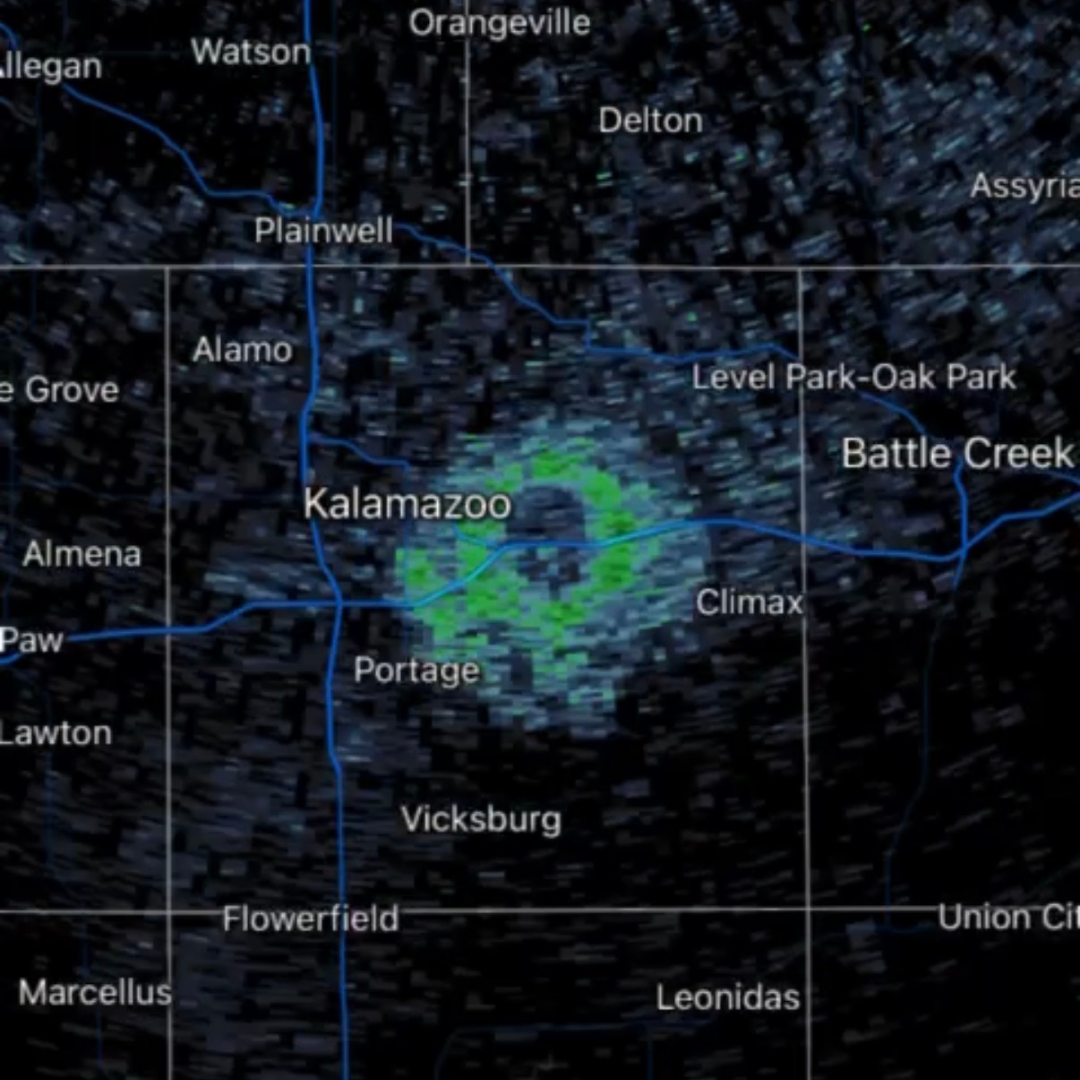
The classic “donut” radar signature from September 6, 2026. 📸 Caleb Putnam.

The cooling towers at Morrow Dam, on the west side of Morrow Lake.
Let’s back up a second, though. Some of you may be asking, “What exactly is a Purple Martin roost anyway?” In late summer, before Purple Martins migrate to their wintering grounds of South America, they gather in large flocks to feed, socialize, and rest before making their journey. These roosts can sometimes contain tens of thousands of Purple Martins in one small area! Often times the roosts are associated with large bodies of water, with large reed beds where they can congregate and remain sheltered from predators during the night.
The location of the radar signature was nearby, and I was familiar with the general area, including the fact that there were a pair of large cooling towers from a defunct coal power plant nearby, so I knew exactly where to start. My money was on those towers.
I’ll be the first to admit that before this experience, I did not know too much about Purple Martins, specifically their pre-migratory habits and behavior. And so I had Chimney Swifts on my mind. Chimney swifts also gather this time of year in pre-migratory roosts, and these cooling towers would potentially make an ideal roost for a Chimney Swift.
So that evening I gathered my binoculars, my scope, and my camera, and I ventured out. I got as close to the cooling towers as I could, and by the time I arrived, I could already see several hundred birds. Many were flying quite high, and they all seemed to be around the cooling towers, and also further to the east.
In a case of mistaken identity, I identified these birds as Chimney Swifts. They were quite far away (since the land around the towers is owned by a power company, I was unable to get close), and I had heard a Chimney Swift, so I made the assumption that they were all Chimney Swifts. However, what made me wonder if that were true or not was the fact that I did not see any of them enter the chimney, and as the evening progressed, they all seemed to just vanish, somewhere further east of the towers.
Unresolved, I decided to go back the following morning before sunrise. Again I loaded up and went to the same location to see what I could uncover. This time, I got more solid evidence. As the sun began to approach the horizon, I heard them! The call of the Purple Martin! For the next 20-minutes, I heard Purple Martins flying overhead. I was not able to see them (it was still too dark), and it was difficult to tell if they were low, or high in the sky. Regardless, now I knew; Purple Martins, not Chimney Swifts. And quite possibly a large number, too, since the vocalizations continued for quite some time.
So that evening, the evening of September 7, I asked senior avian biologist and personal mentor John Brenneman if he’d like to join me on this scouting adventure. He gladly agreed, and that evening I took him to the cooling towers. We both agreed that a better vantage point would be the boat launch at Morrow Lake, a mile or so to the east. We eagerly packed up, and made our way to the boat launch.
We parked the truck, grabbed our binoculars, and walked to the dock. We put our binoculars up to our eyes, and there they were; an uncountable number of Purple Martins flying in for the evening over the lake!
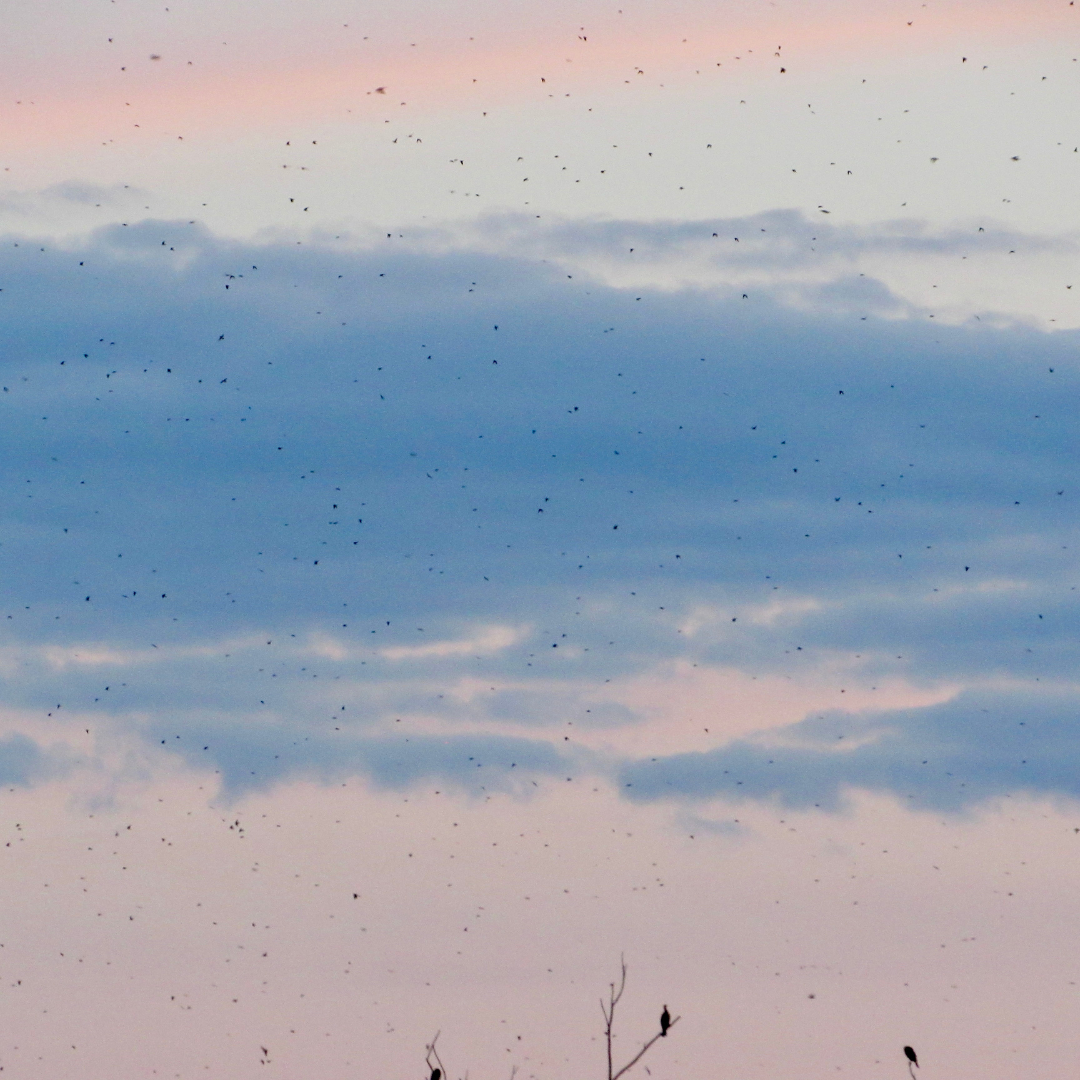
A sky of Purple Martins over Morrow Lake, with Double-crested Cormorants in foreground. 📸 Seth Chapman
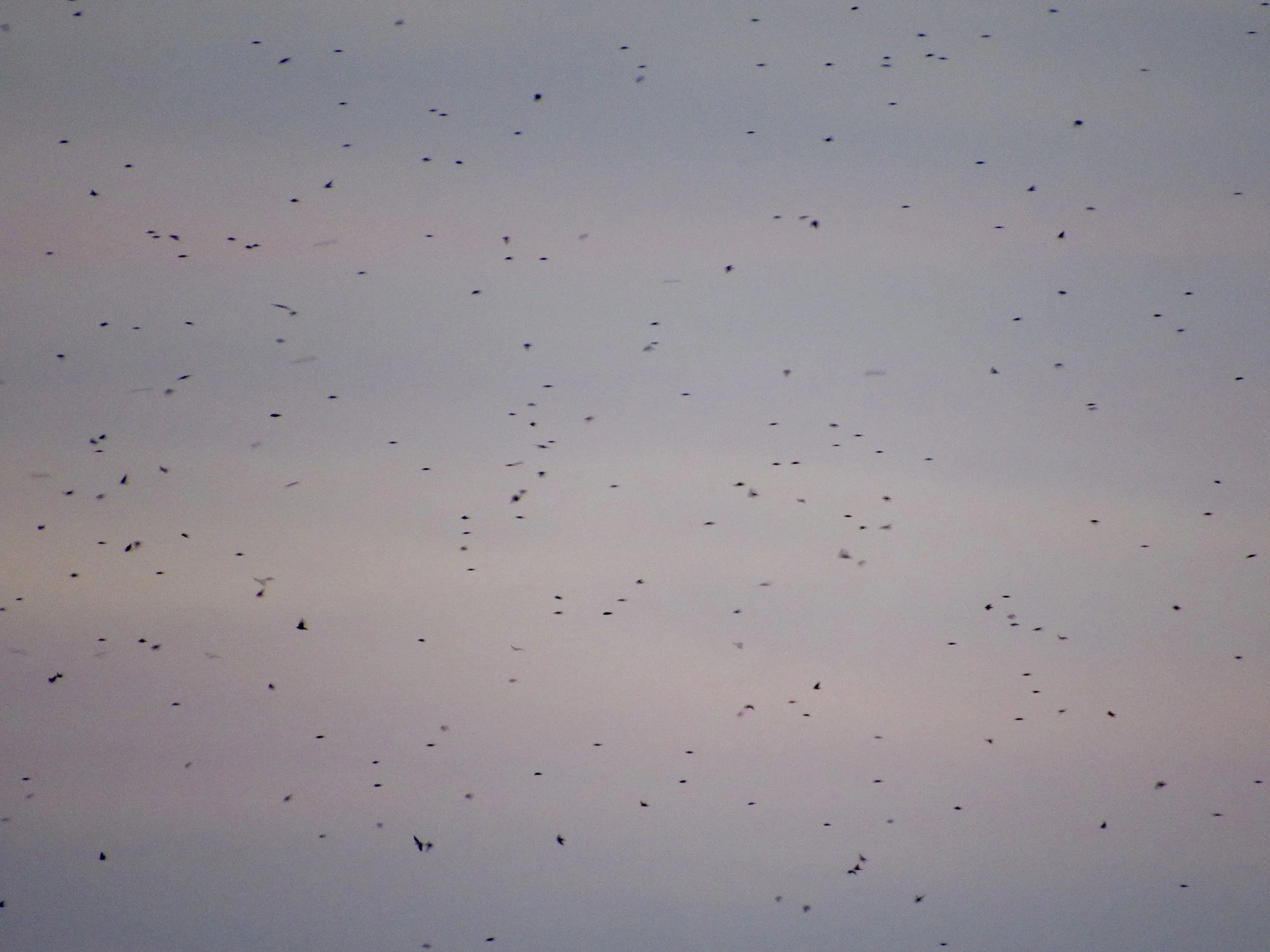
Purple Martins over Morrow Lake at sunset on September 7. 📸 Seth Chapman
The magnitude of this discovery was and is still settling in. The significance of it, the fact that until now, it has gone undiscovered. Is this the first year they’ve decided to roost here? Have they been doing this for years, right under our noses? The previous high count of Purple Martins at this location was 8, and right now, we were looking at such a staggering amount, it was truly difficult to say if there were 5,000 or 50,000.
One thing I did know for certain: I needed to share this with my birding community, ASAP! It was getting late in the year for Purple Martins to still be at this latitude, and I knew that they would fly south in a matter of days. In fact, the record late date for a Purple Martin in Kalamazoo county is currently October 4.
The following day, September 8, I wanted a closer look. Since the bed of reeds was on the opposite side of the lake as the boat launch, I thought it would be fun to take kayaks out and approach the roost from the water. John, myself, and two other close friends paddled out an hour and a half before sunset. What followed was easily one of the top three birding experiences I’ve ever had. Magical. Spiritual. Overwhelming. No word to describe the experience we had that evening on the water.
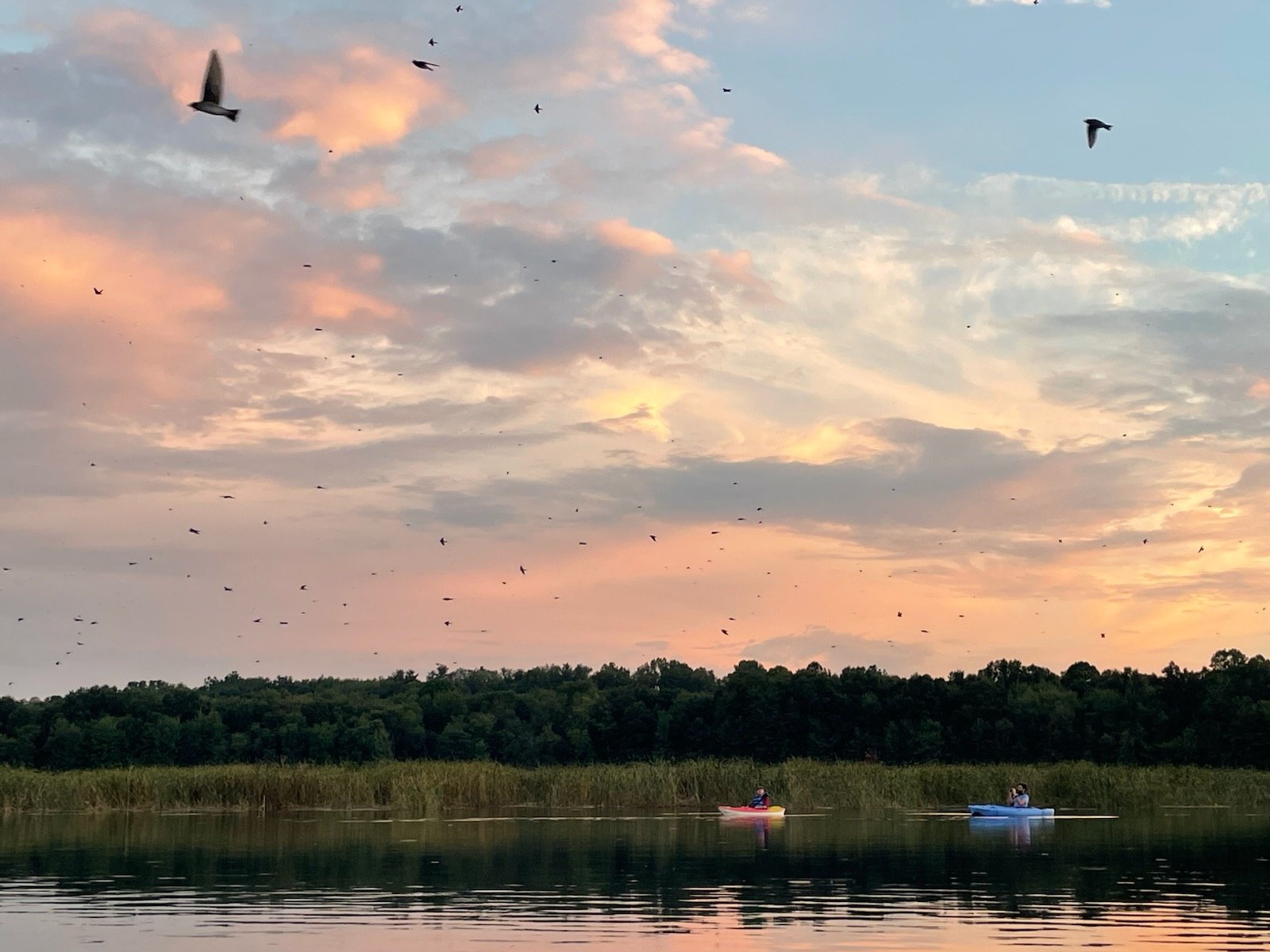
Amidst the Purple Martin roost on Morrow Lake. 📸 Seth Chapman
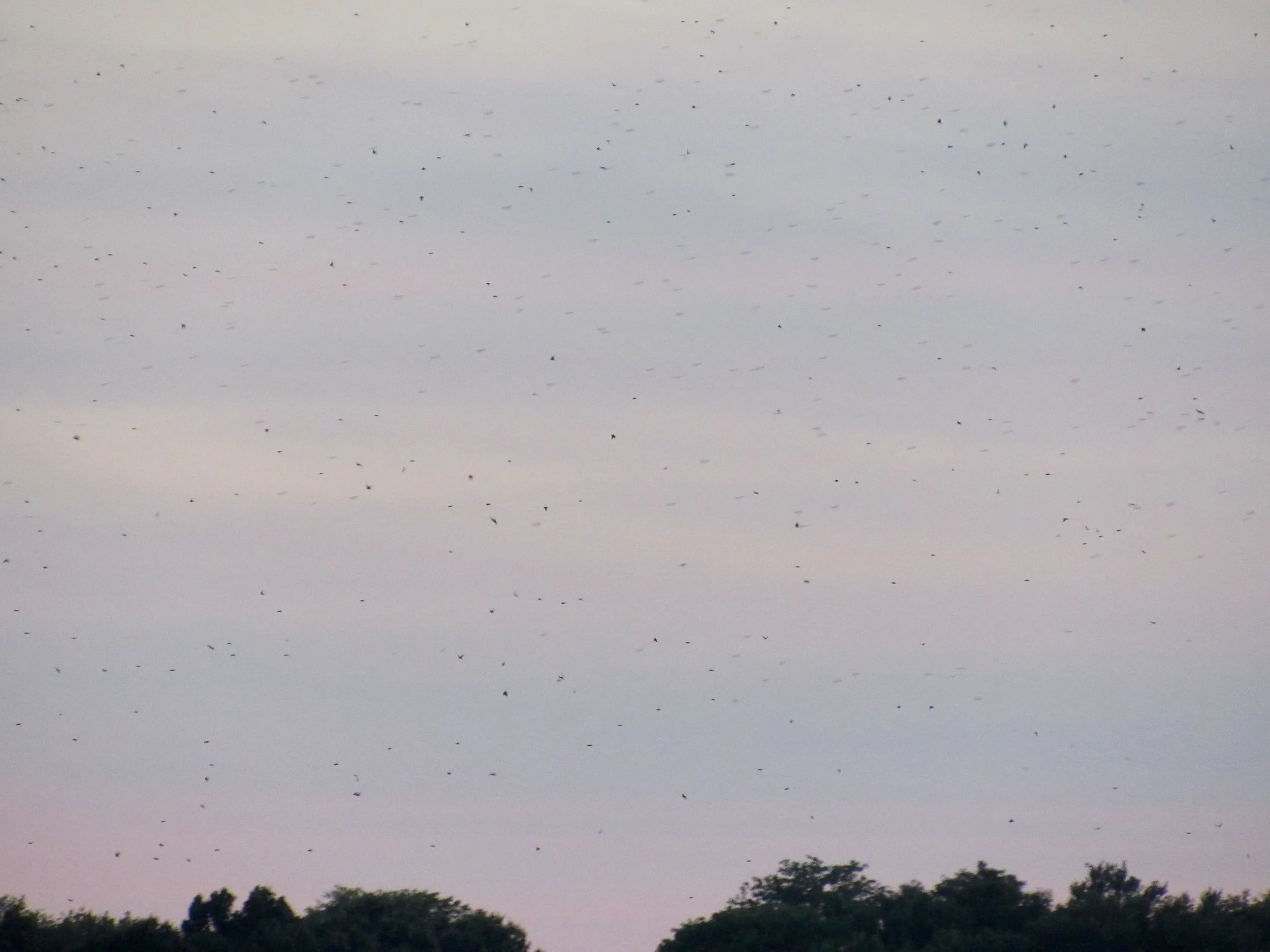
Purple Martins in the Sky over Morrow Lake. 📸 Seth Chapman
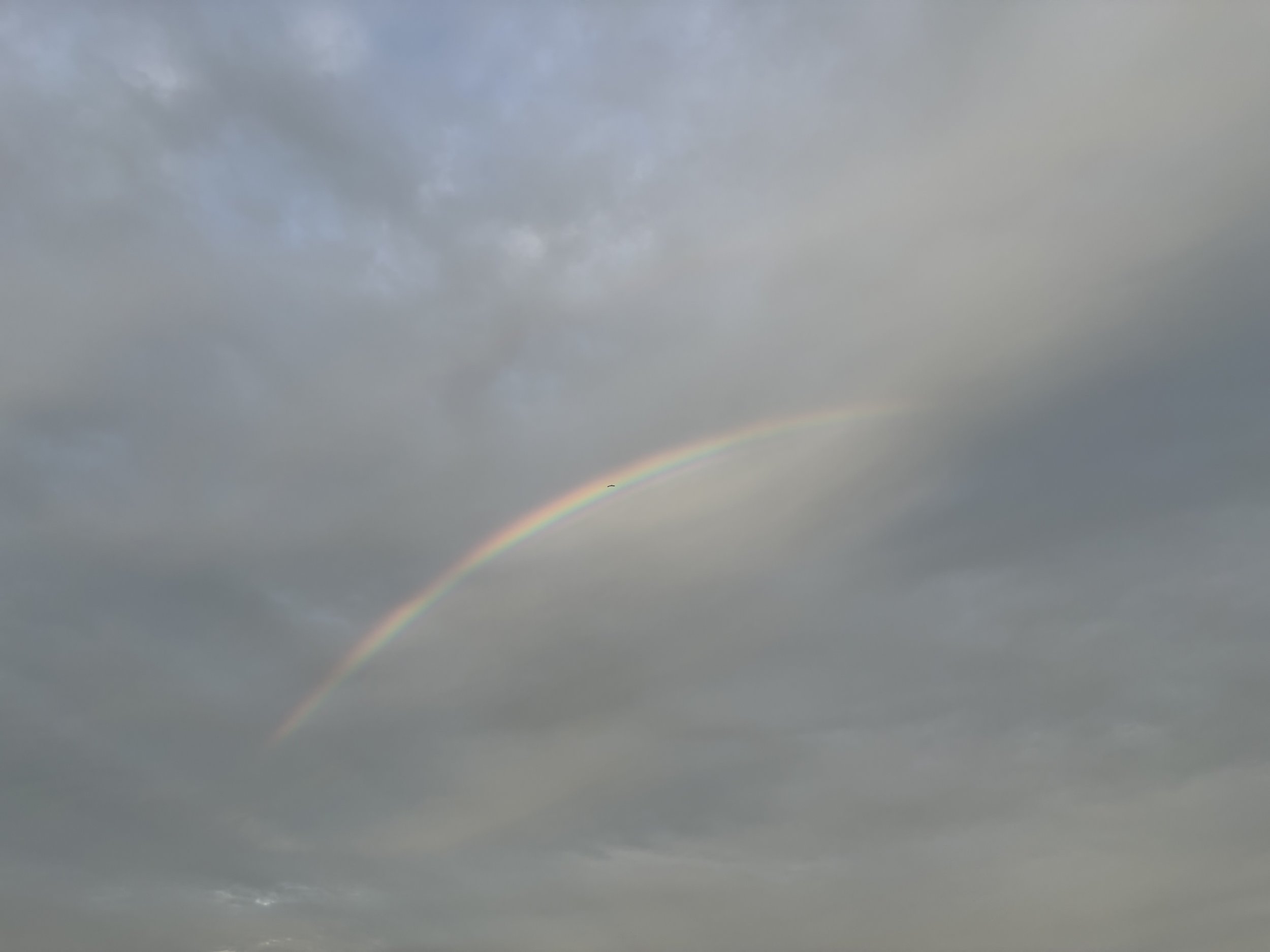
Purple Martin on a Rainbow. 📸 Seth Chapman
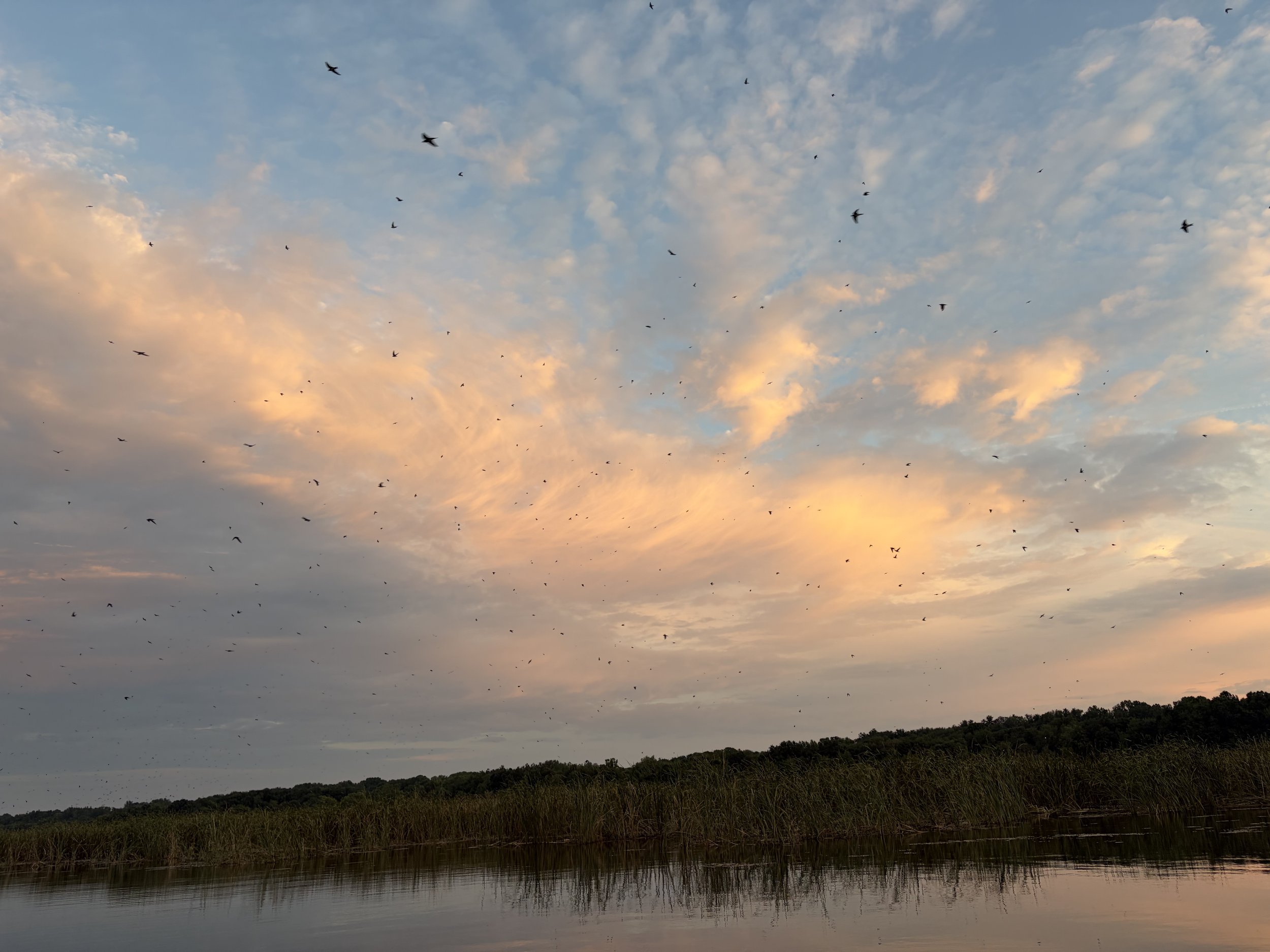
Purple Martins gathering to roost. 📸 Seth Chapman
September 10 was the date I set for my first ever pop-up event. And let me tell you, the birding community showed up! About 30 people gathered at the boat launch to witness this spectacular discovery.
Once everyone arrived, I shared some information on the Purple Martin, and gave some context so that we could all better understand what was happening and why they were here. It was truly a heartwarming event. A few folks brought kayaks, and got up close and personal views. Even before the Purple Martins started gathering, there was great birding; 140 Double-crested Cormorants, a Bald Eagle, numerous Great Egrets, a Common Gallinule, and did I mention the Red-winged Blackbirds?!
This reed bed was shared with them as well, and there were roughly 1,200 of them flying low over the reeds, back and forth throughout the evening, the golden-colored sunlight glinting off their wings so they appeared to sparkle in the distance.
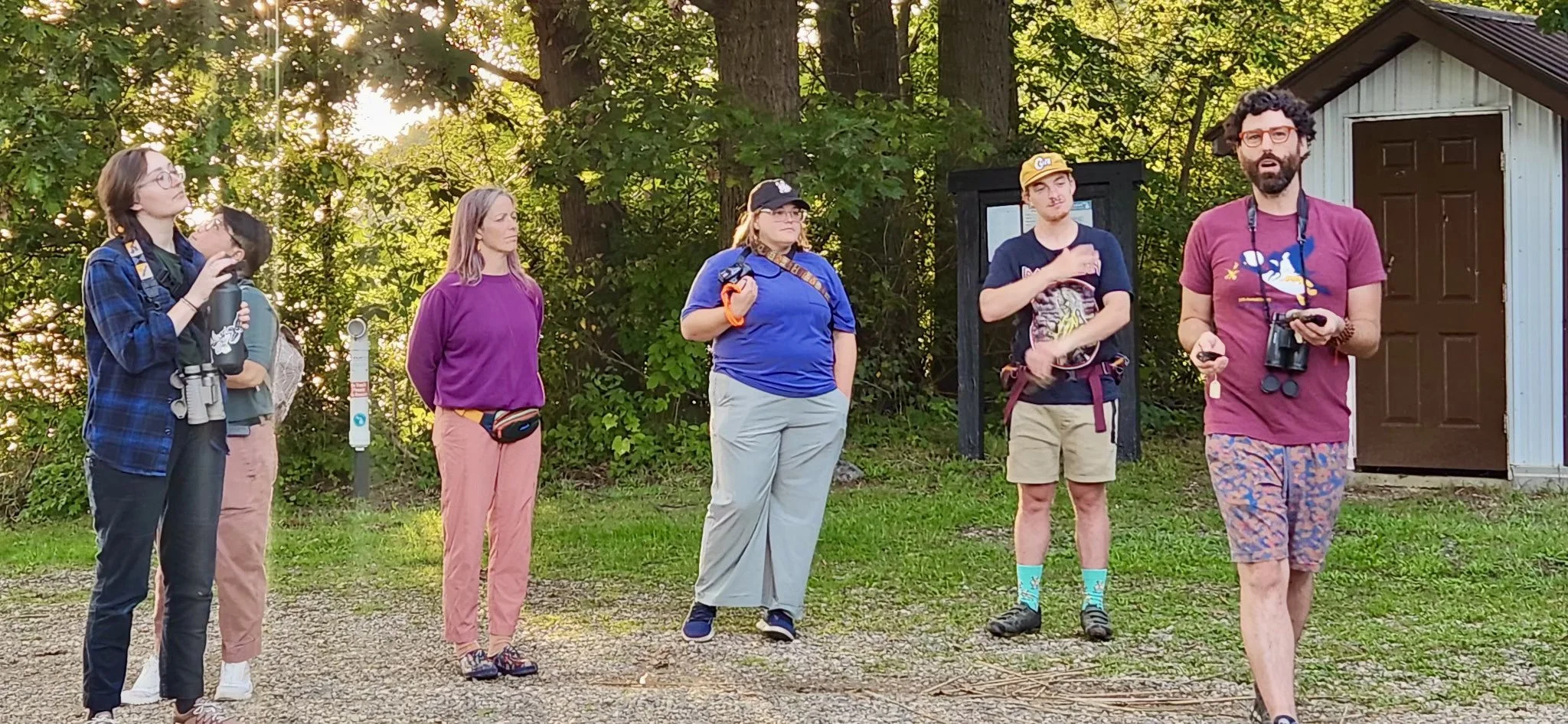
Attendees learning about the Purple Martin. 📸 Jessica Fischer
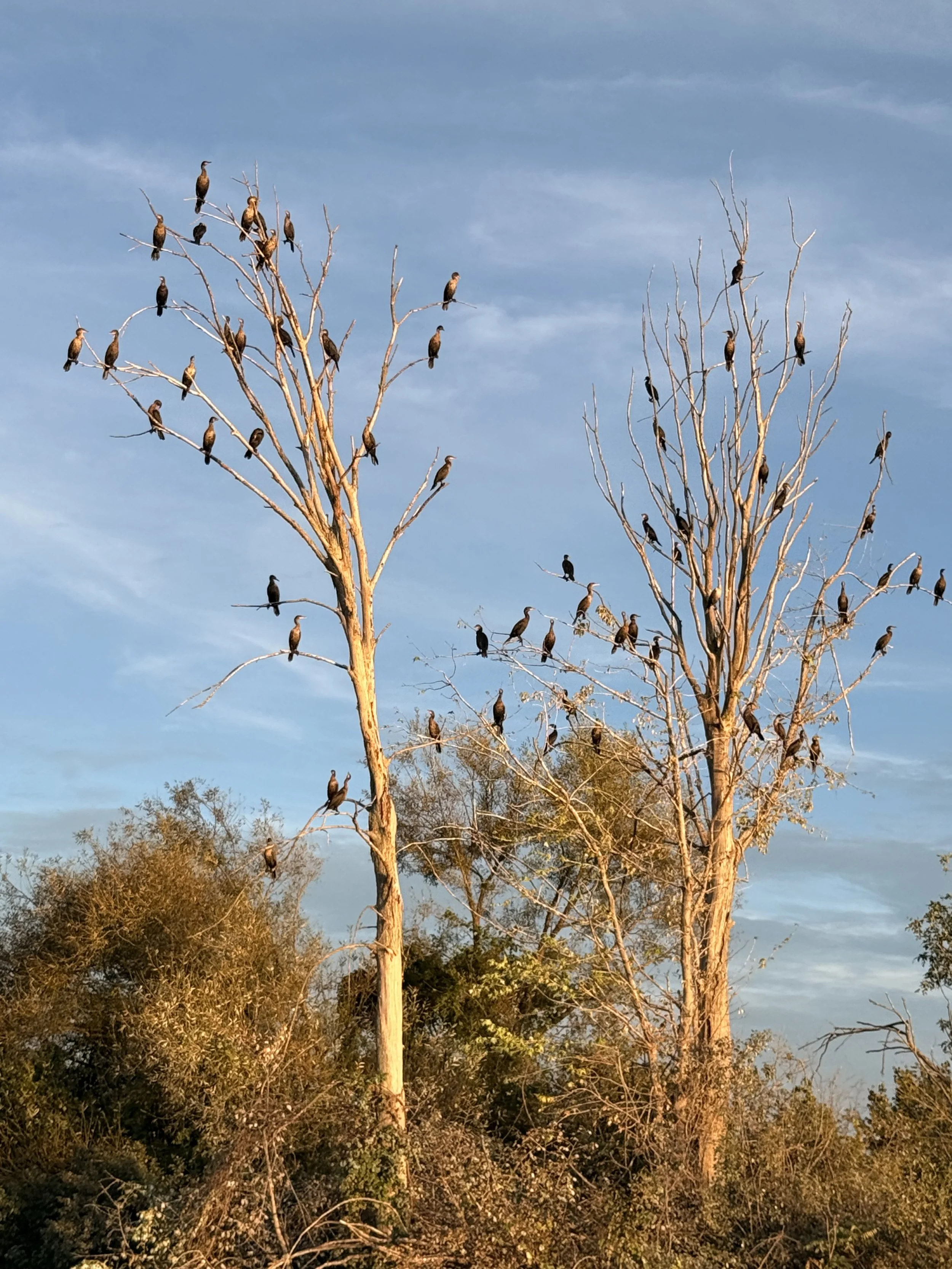
Double-crested Cormorants on Rowe Island. 📸 J. Kyon
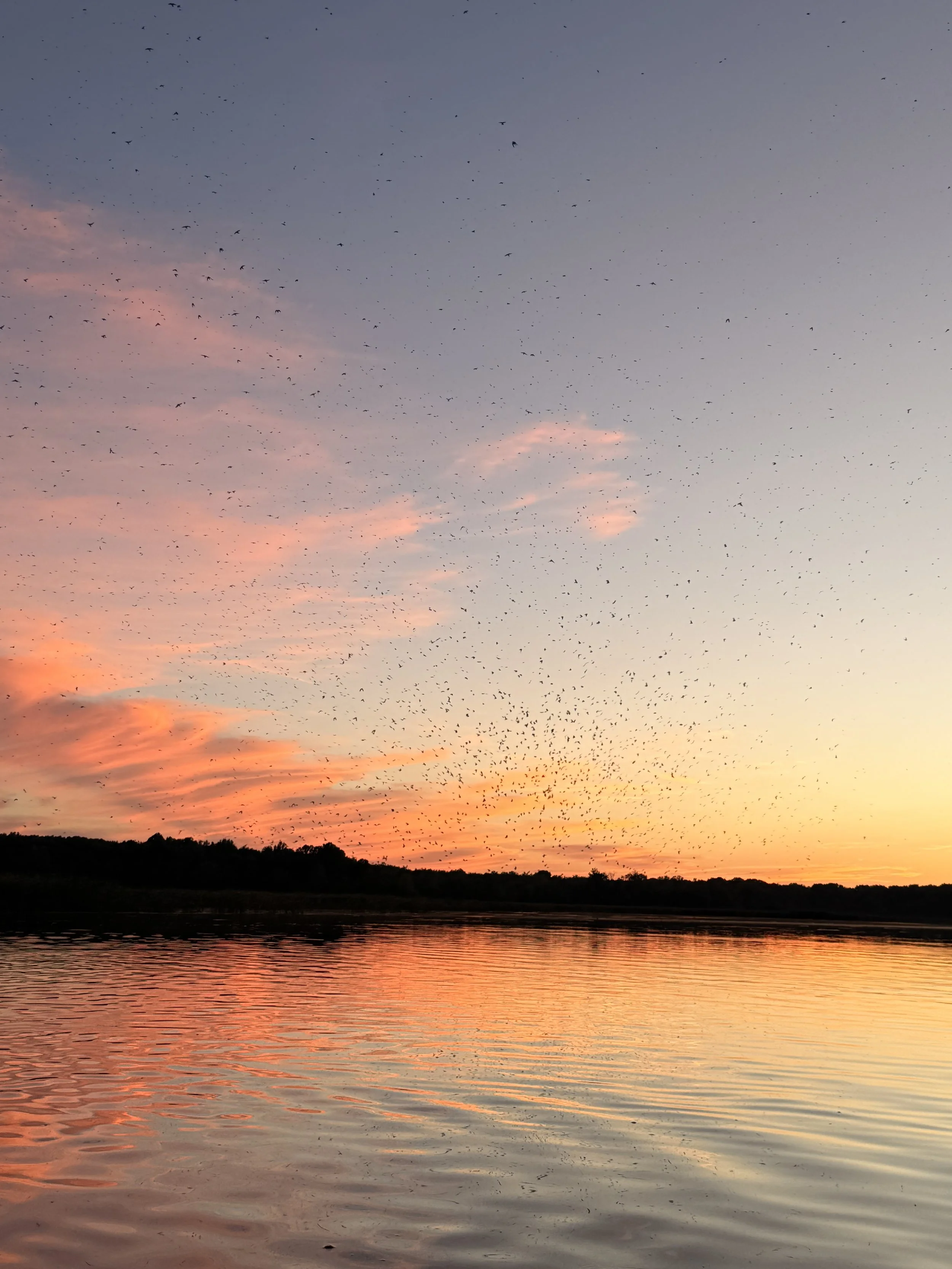
Purple Martins gathering at sunset. 📸 J. Kyon
The event was a huge success. Together, we raised $120 for the Purple Martin Conservation Association, a non-profit which “serves as a centralized data-collection and information hub on this species of songbird.” We thank them for their work in this field.
A powerful, transformational experience. I gained so much knowledge from this series of events, and it fed the souls of those involved. I came away with a better understanding of the feeding and roosting behavior of Purple Martins and how they differ from Chimney Swifts, the ecological requirements and preferences of this species, and what it feels like to be in their presence at such numbers.
I wish them all a safe journey to Brazil. I’m already excited to scout this location in 2027 to see if they return. Thank you to Caleb Putnam, whose keyboard curiosity spurred this discovery. Thank you to John Brenneman for his expert knowledge and unending support and mentorship. Thank you to my birding community who showed up and got to experience this firsthand.
This event has received press! Caleb Putnam and Will Keller’s most recent episode of The Real Birding Podcast discusses this discovery. It’s a really good listen if you’re wanting to learn more about this species and this roost! You can listen to that episode here.
Caleb Putnam was also interviewed by WOODTV 8, and that segment can be watched here.
Interested in the full checklist of birds we saw during this event? You can view the eBird checklist here.
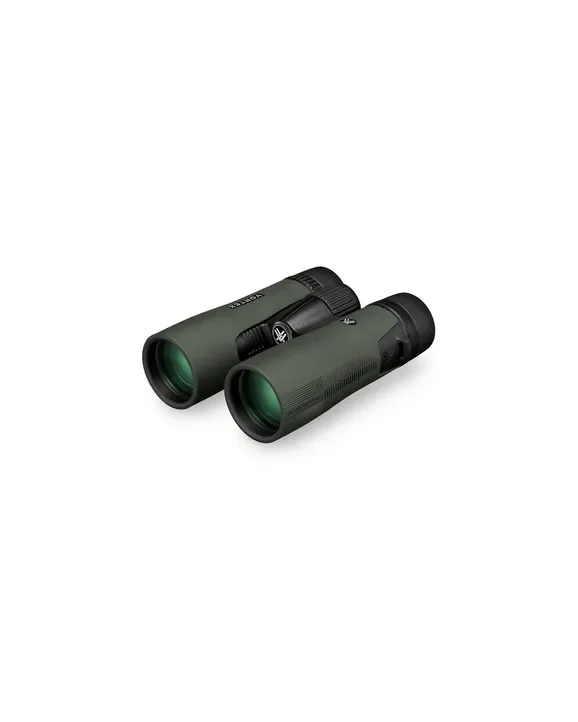
You simply will not find a better pair of binoculars at this pricepoint!
These binoculars are excellent for birding, delivering hard-working, reliable optics, sharp resolution, enhanced contrast, and rugged durability.
Waterproof, shockproof, and fogproof, these will be the last pair of binoculars you’ll need to buy!
Each pair of binoculars comes with:
Binocular harness
Comfort neck strap
Tethered objective lens covers
Rainguard eyepiece cover
Lens cloth
Unlimited, unconditional, lifetime warranty
If you’re looking for a pair of binoculars that are ideal for those who wear glasses, and have more capability birding in low-light conditions, with upgraded glass, check out the Vortex Viper HD 8×42 Binoculars.
Birds with Seth is an official Vortex Optics dealer. You will not find a better price online, as these are sold at MAP (minimum advertised pricing). If you do find these binoculars listed for a lesser price, please contact me at seth@birdswithseth.com so that we adjust pricing accordingly.
Unless backordered, orders will dropship with FREE SHIPPING via directly from Vortex Optics, typically within 24 hours from date of purchase.

A must-have for birders of all ages!
Written and illustrated by David Allen Sibley, this guide details 51 species of waterbirds - ducks, shorebirds, loons, grebes, swans, geese, gulls, terns, bitterns, herons, and egrets - both common and exotic- found in the Great Lakes region.
This guide includes captions which capture the gestalt of each species, both in-flight and perched illustrations, and season information.
This field guide is very durable, waterproof, and measures 4”x9”.
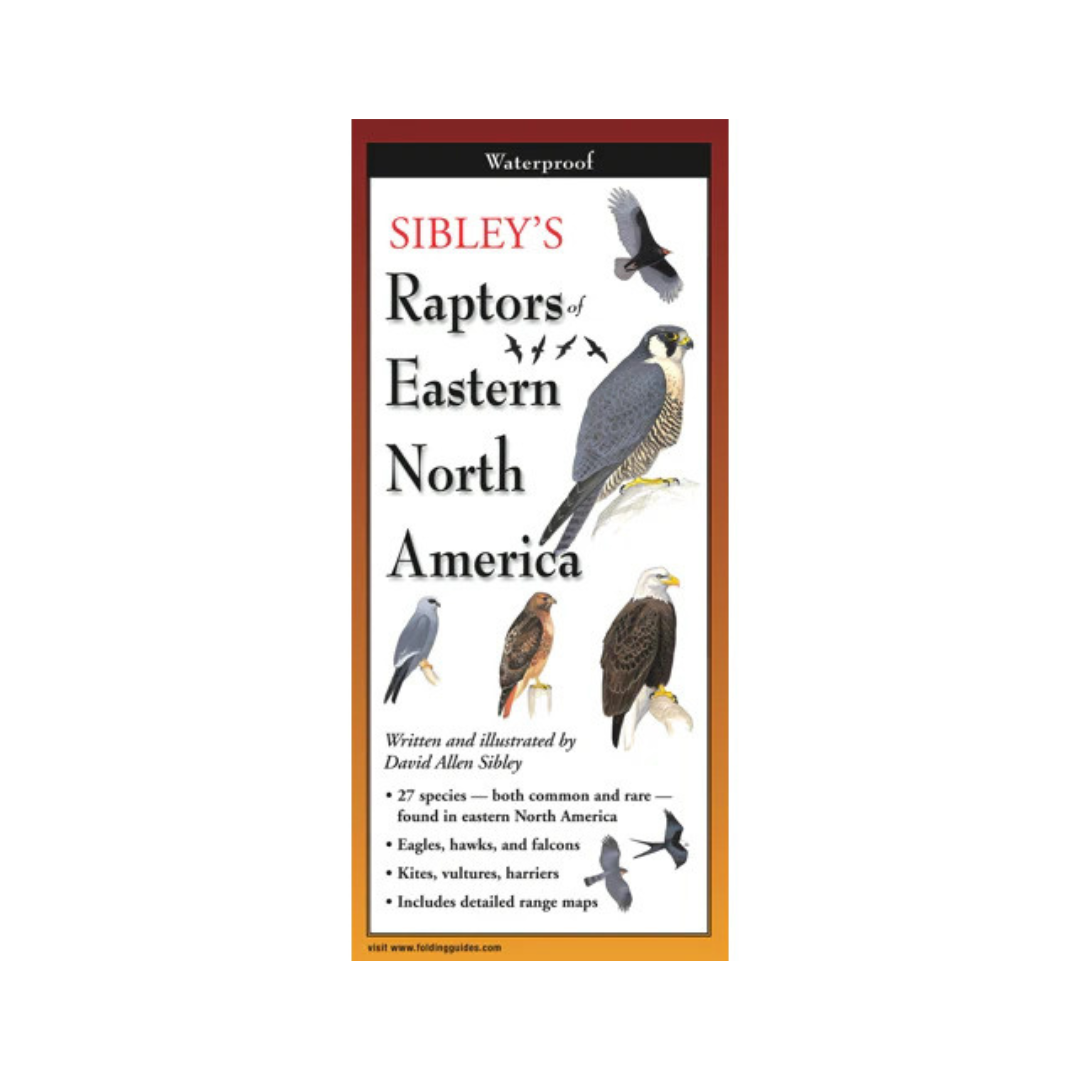
A must-have for birders of all ages!
Written and illustrated by David Allen Sibley, this guide details 27 species of eagles, hawks, falcons, kites, vultures, and harriers- both common and exotic- found east of the Rockies.
This guide includes captions which capture the gestalt of each species, detailed range maps, both in-flight and perched illustrations, and special in-flight illustration panels that show relative sizes.
This field guide is very durable, waterproof, and measures 4”x9”.

These stickers are awesome! This sticker book contains over 400 scientifically-accurate bird illustrations, making the perfect gift for bird-lovers, crafters, scrapbookers, and sticker lovers.
Peel and stick hundreds of extravagant illustrations to decorate greeting cards, letters, packages, classroom notebooks, scrapbooks, cell phone cases—anything your heart desires!
For the curious-minded, each bird is identified by name.
24 pgs.
