
March 8, 2026: Mindfulness + Birding - Intimacy with Place
Mindfulness is the practice of bringing attention to what is happening in the present moment while letting go of judging the moment as good or bad. In practicing mindfulness, you choose to breathe into whatever may be happening right now, instead of distracting yourself from it.
The practice of being mindful teaches us to be here now, with the earth as it is, allowing us to lean into pleasant experiences in nature and enjoy them fully. One of the things I enjoy most about birding is that when we are birding, we are fully present, in the now.
This class is the first class of the Mindfulness + Birding series. My inspiration for this series comes from Micah Mortali’s book Rewilding: Meditations, Practices, and Skills for Awakening in Nature. In his book, Micah has developed a rewilding flow, designed to bring mindfulness into your everyday life, and to develop a sense of calm, connection, and confidence outdoors. This sequence contains 10 steps, each of which you could concentrate on for a lifetime. Those steps are:
Intimacy with place
Centering
Breath
Gratitude
Embodiment
Walking with awareness
Engaging and expanding all the senses
Nature meditation and observation
Bushcraft
Share circle
Today, we took the first step and became curious about the land we live with. In particular, Woods Lake.
We gathered at Wild Birds Unlimited on Oakland Drive, filled up our mugs with chai, and arrived via the breath. Seth led a short breath practice, guiding participants along the way, so that we could begin the session feeling grounded and present.
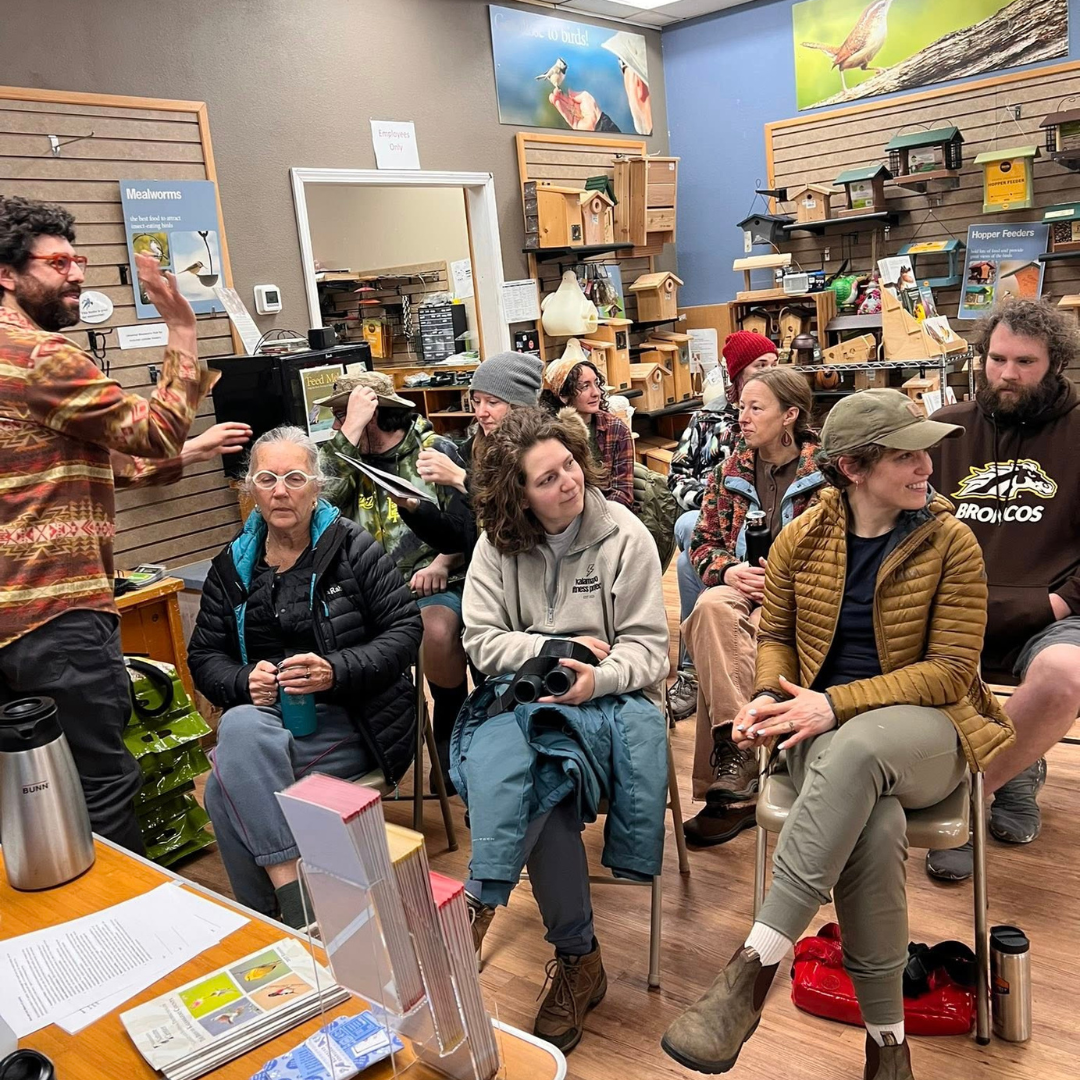
Gathering at Wild Birds Unlimited.
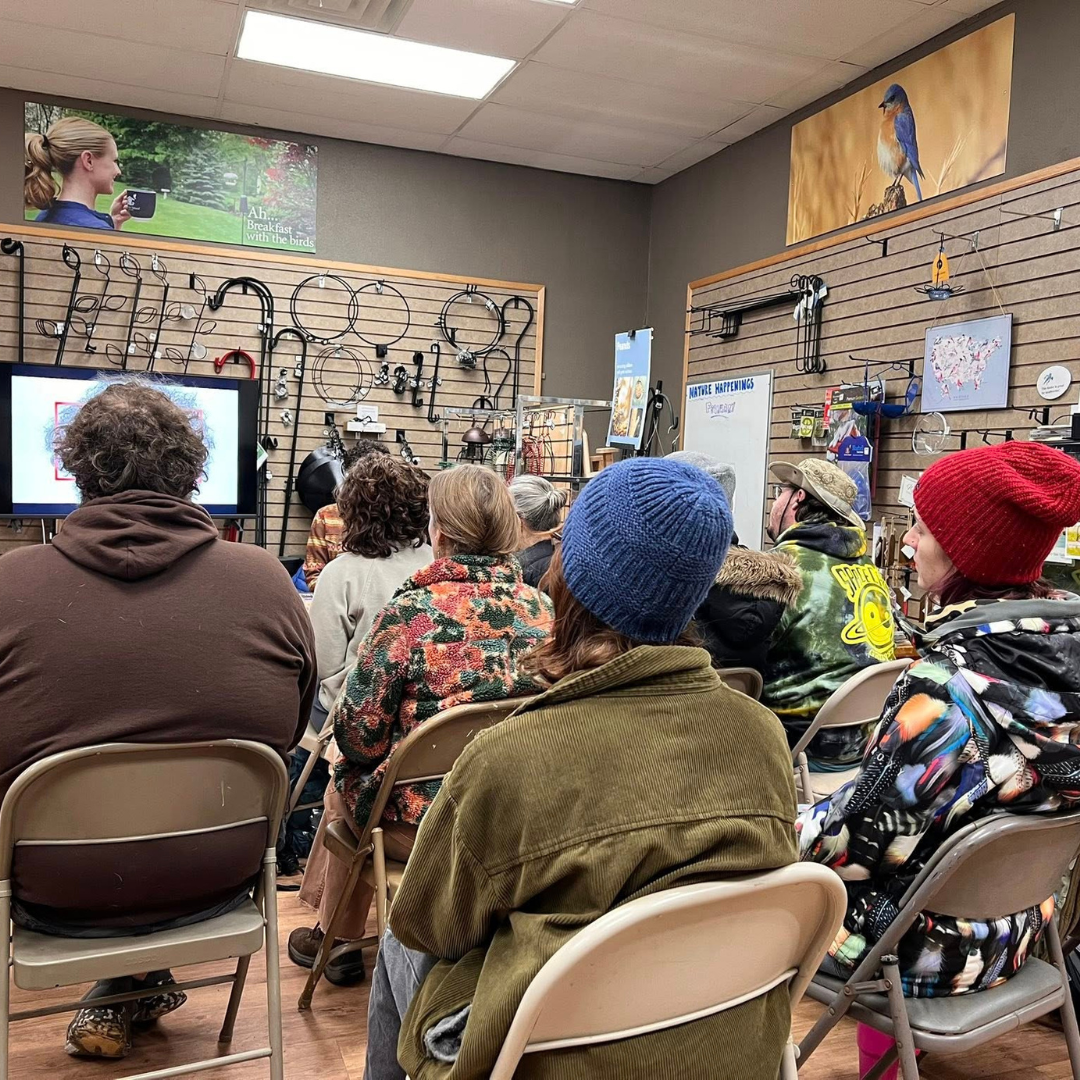
Learning about the history of Woods Lake.
Knowing that you love the earth changes you,
activates you to defend and protect and celebrate.
But when you feel that the earth loves you in
return, that feeling transforms the relationship
into a sacred bond.
- Robin Wall Kimmerer
Before our bird hike at Woods Lake, we learned about the geography and geology of Woods Lake; what type of lake it is, how it was formed, how deep it is, and the habitat that surrounds the lake.
We learned of the history of the lake with regards to the Native Americans, specifically the Potawatomi, and of the mysterious garden beds that pre-date Native American times.
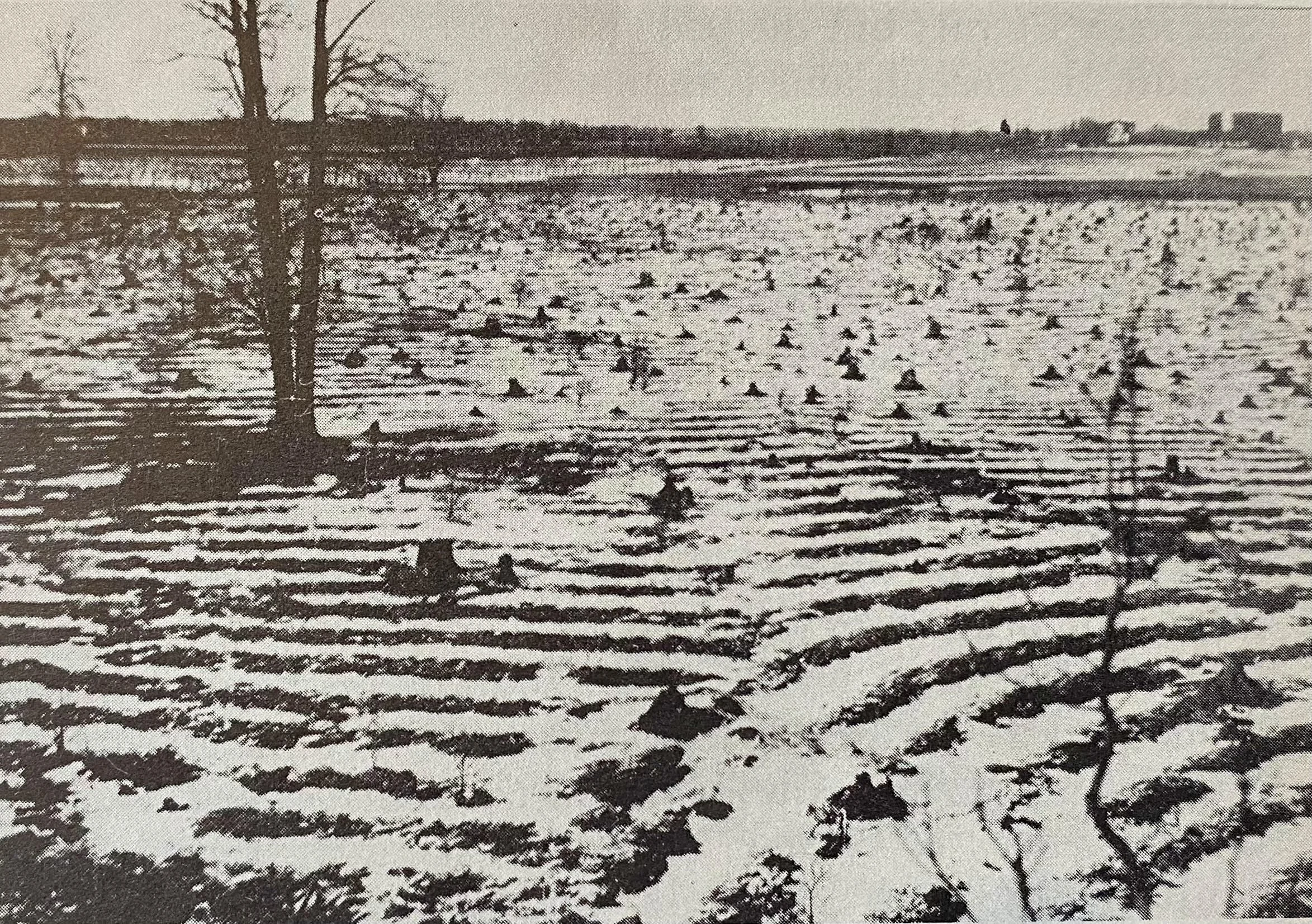
Mysterious garden beds of Michigan.
We explored the more recent history of the area too, including learning about Smith Liveoak Wood, who the lake was named after, as well as the various iterations of attractions that once skirted the lake. Did you know that at one point there was a roller coaster at Woods Lake?! Did you also know that in its heyday, between 1911-1915, Oakwood Park attracted 15,000 patrons each day?
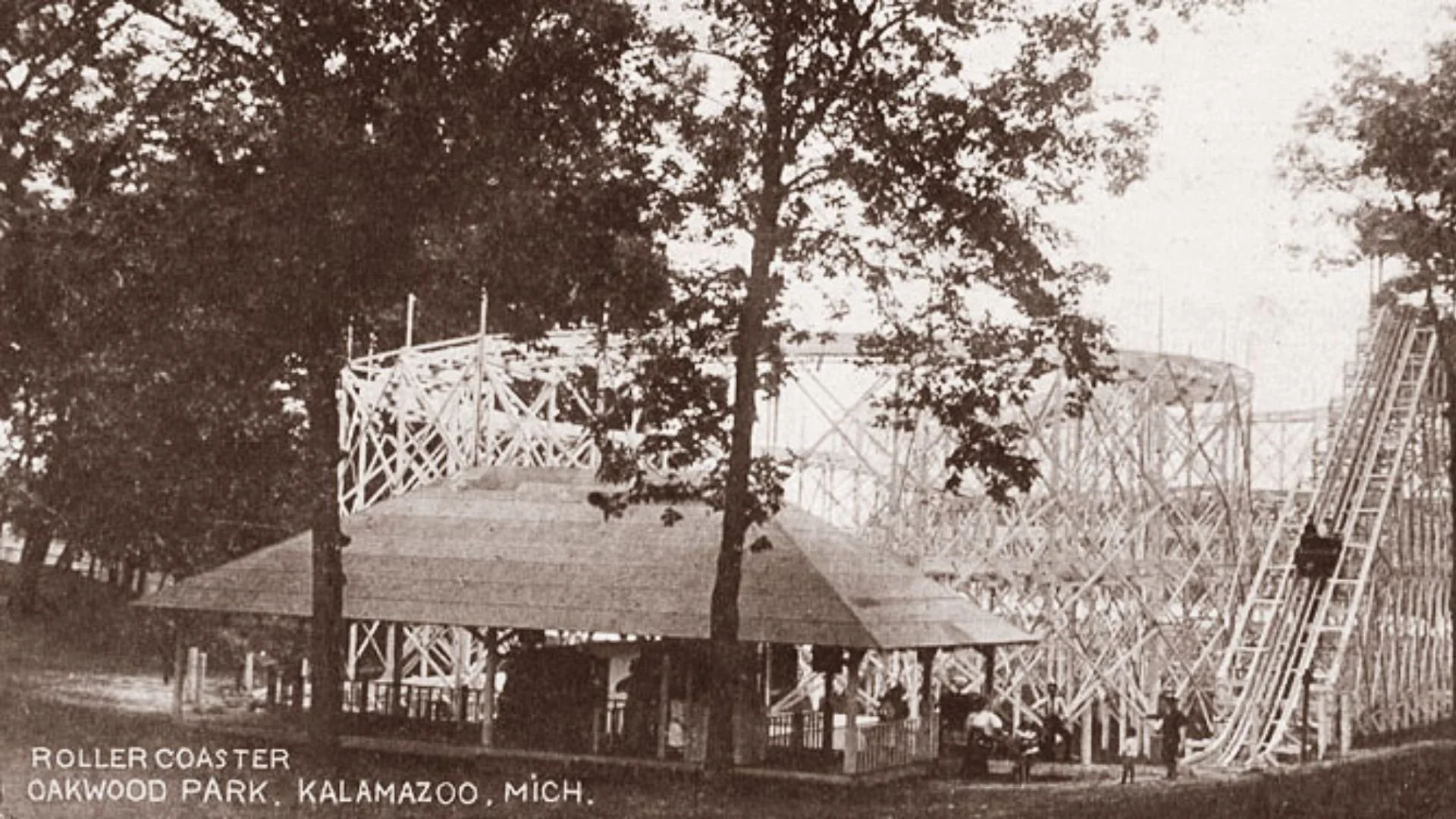
Oakwood Park Roller Coaster, c. 1907
We learned about the fate of the park, and the current state of the lake and the surrounding area. Finally, we learned about how important this habitat is for birds, and we took a “birdseye” view of what birding has been like so far at Woods Lake.
Using eBird, we learned that while Woods Lake provides excellent habitat for both waterfowl and songbirds, it is not a heavily birded area. As of this class, a total of 81 checklists at Woods Lake have identified 97 unique species. The following species are seen more frequently than the regional average at Woods Lake: Trumpeter Swan, Canada Goose, Tufted Titmouse, Mallard, American Crow, and Black-capped Chickadee.
With a newfound sense of place, and a gorgeous sunny day awaiting, we strapped on our binoculars and made our way outside to explore Woods Lake. We took our time, we meandered, and took plenty of intentional pauses to observe the many species of birds arriving at the cusp of spring migration.
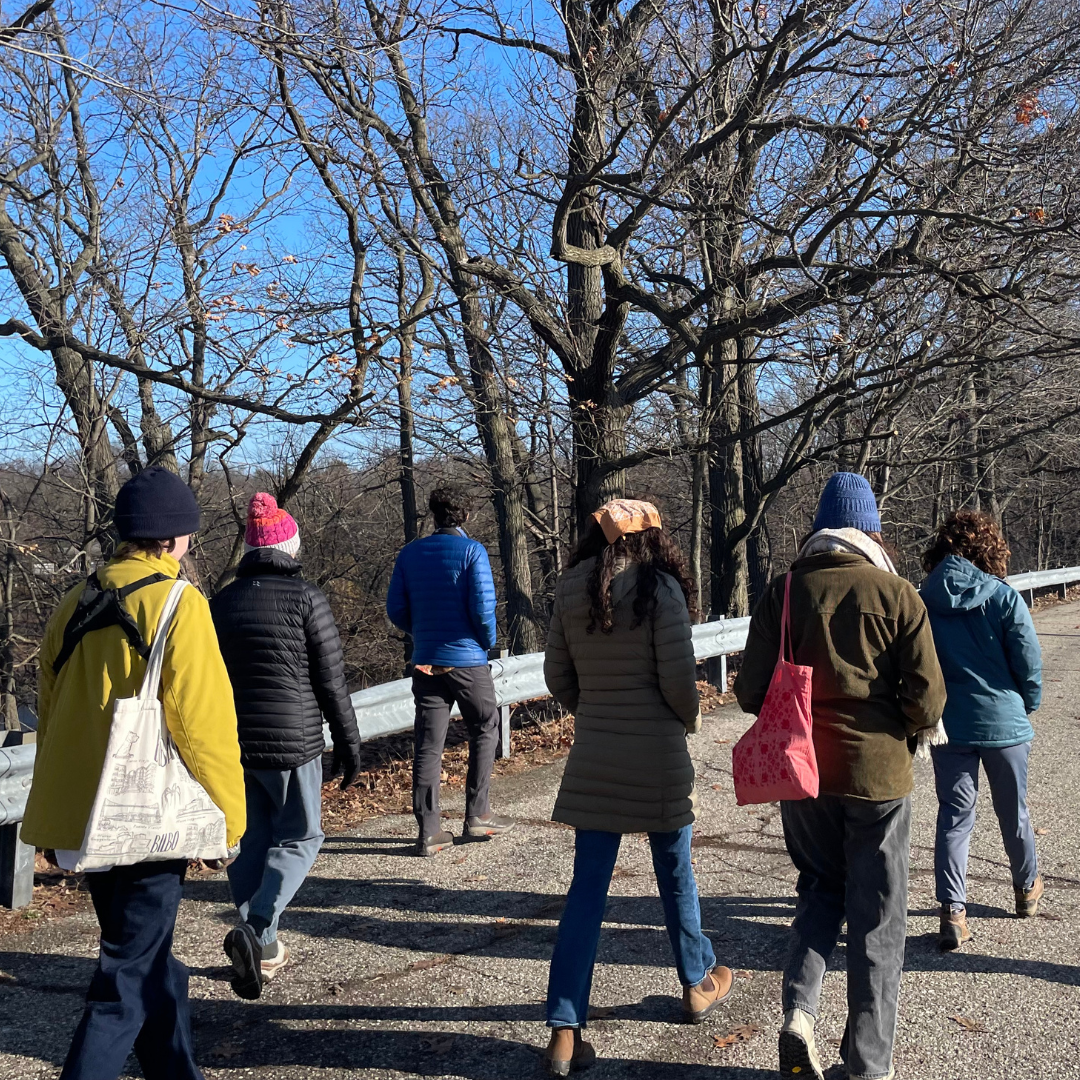
Heading to Woods Lake on a sunny Sunday morning.
To our surprise, we saw quite a few diving and dabbling ducks; a pair of Wood Ducks, Mallards, Bufflehead, and Greater Scaup. Overhead were three Red-tailed Hawks, their wing and tail feathers brightly illuminated by the sun. A Turkey Vulture, many species of woodpeckers, and many songbirds were also present. What many of us enjoyed the most, though, were the Sandhill Cranes. Soaring high above in the sky, the cranes were a delight to see! We even got to watch four of them come in for a landing at the east edge of the lake. What a treat that was!
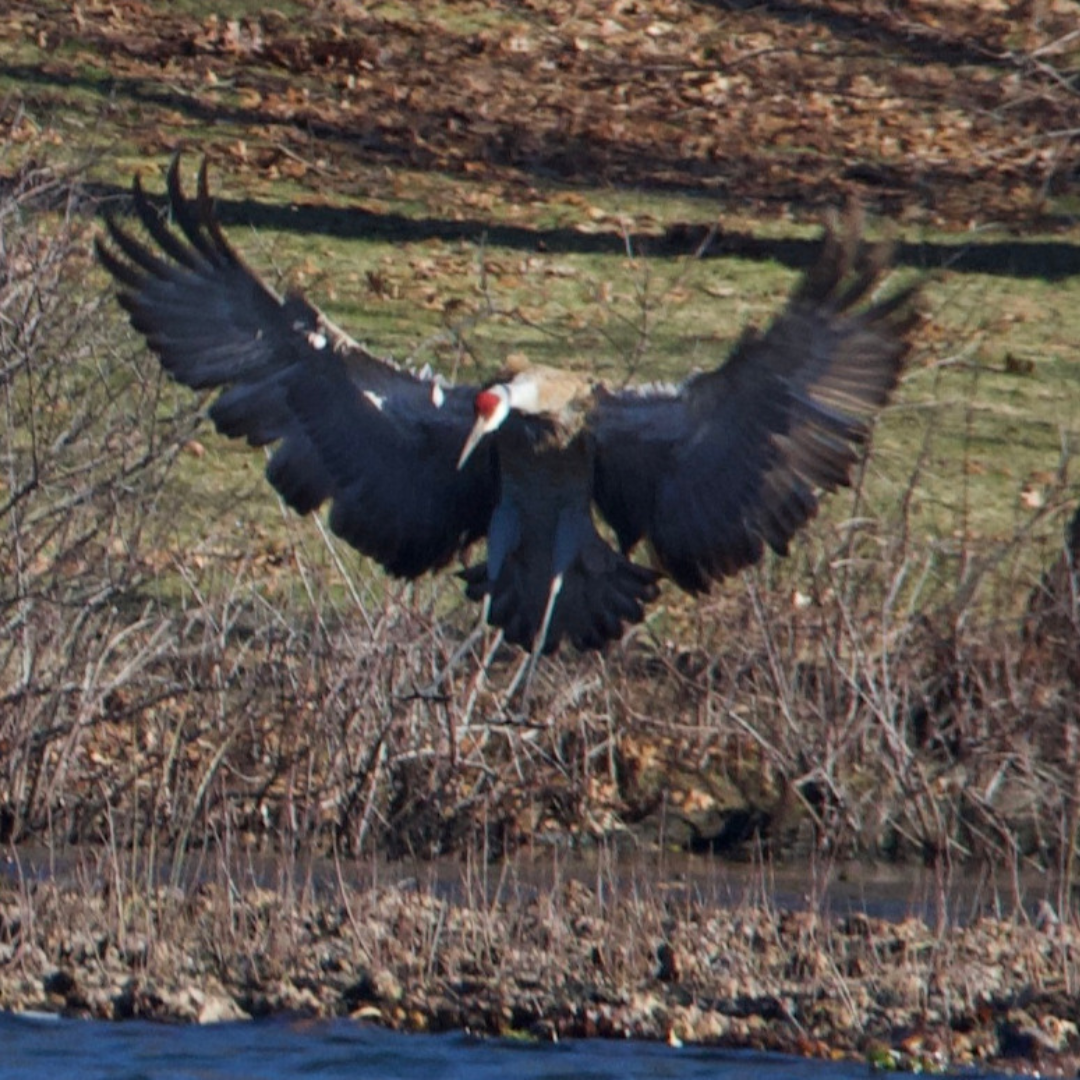
Sandhill Crane landing in Woods Lake. 📸 Seth Messer
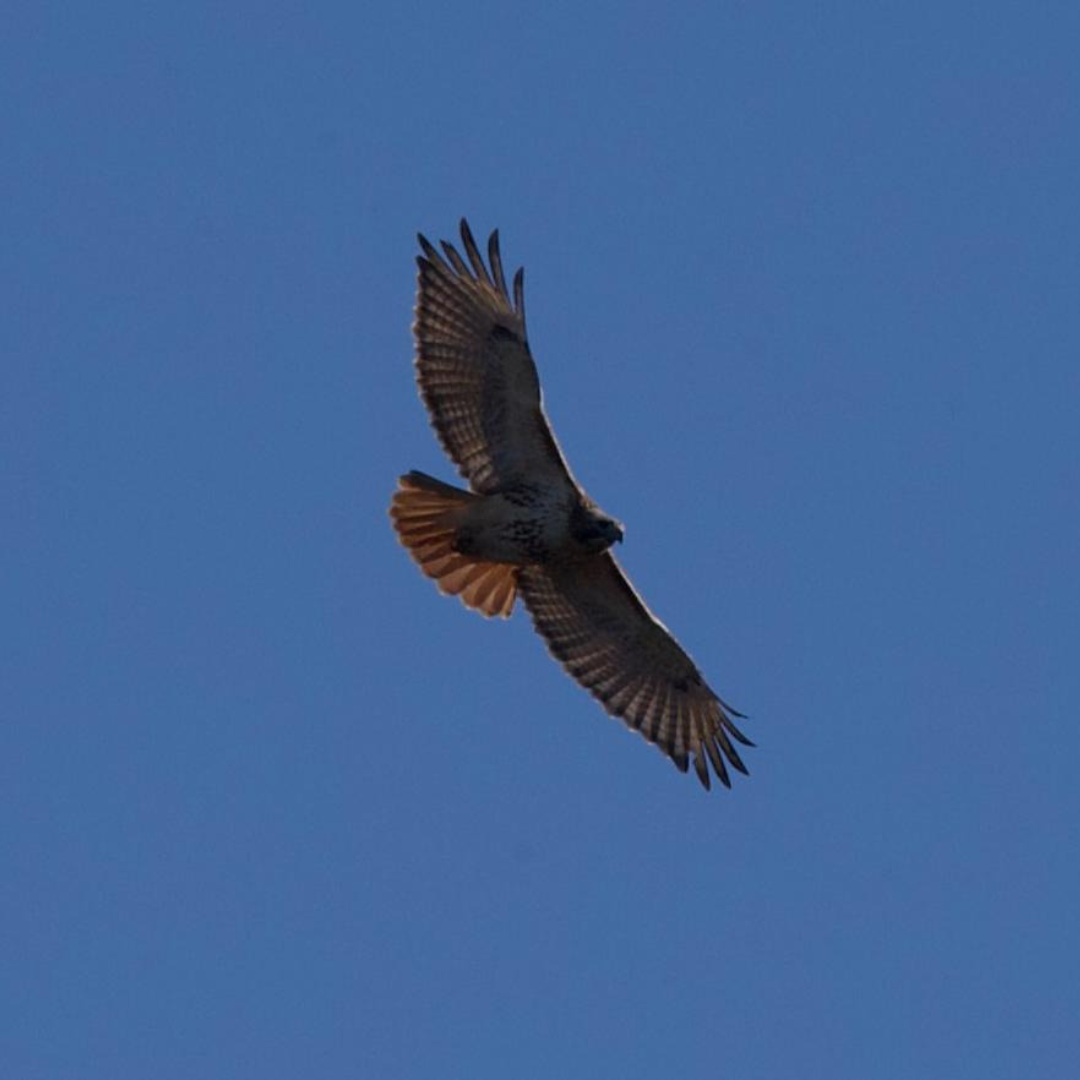
Red-tailed Hawk soaring above Woods Lake. 📸 Seth Messer
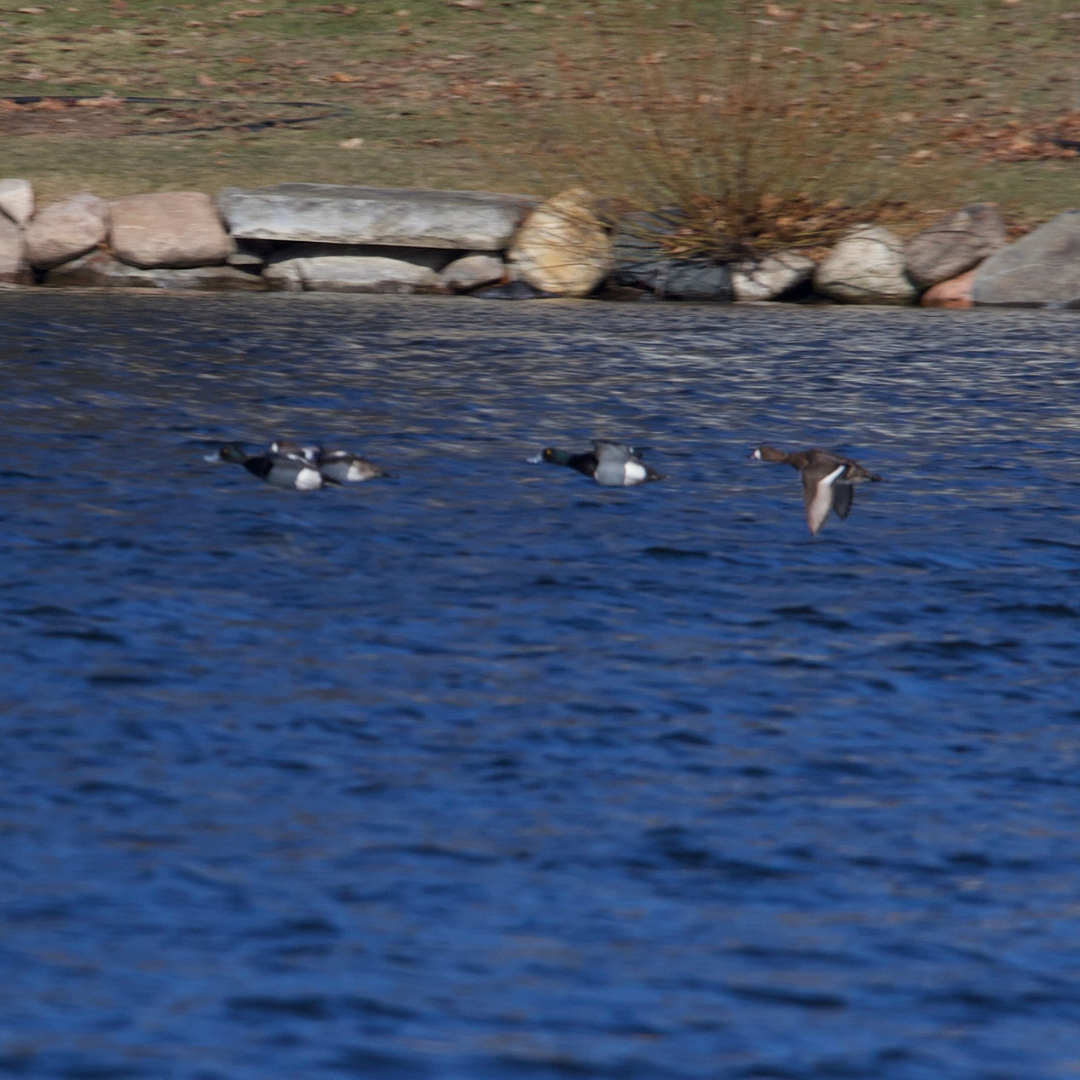
Greater Scaup, a diving duck, flying over Woods Lake. 📸 Seth Messer
We stepped foot on land that has so much history, and wondered what it must have been like hundreds of years ago in this very place. We honored Mother Earth by getting to know her a little bit more. How many meals were had by the Potawatomi that had fished these waters? What must it have felt like witnessing a concert or a balloon ascension during the park’s heyday? What were the birds like in this location 100 years ago?
We had a great morning becoming more intimate with Woods Lake. Thank you to all who attended, and thank you Mother Earth. We’re looking forward to our next session.
To view our full checklist from this morning, click here.
