
April 18, 2026: Hunting for Herons
The morning of April 18 was a chilly one, especially compared to the 70+ degree temperatures the day before. Overcast skies and gusty winds held back the sun and the warmth, but that didn’t stop a group of birders from meeting up to seek out an active heronry along the Kalamazoo River.
A heronry is a specific type of rookery exclusively used by herons. These sites serve as communal nesting grounds, often found high in the treetops near water. This specific heronry has been active for at least the past five years, and contains many breeding pairs of Great Blue Herons.
Before the hike, we gathered at a trailhead along the Kalamazoo River Valley Trail, located just north of the city of Kalamazoo. During our briefing we took some time to become more familiar with the Great Blue Heron, and its relatives. We learned what to look for in terms of size and shape, behavior, color and patterning, and habitat in order to properly identify these majestic birds.
Did you know that when Great Blue Heron chicks emerge from their eggs, they are “precocial”? This means that the birds hatch in a relatively developed state, with downy feathers and open eyes. Many are able to walk and eat on their own in short time. This is unlike that of most songbirds which are born “altricial”. Altricial young are born naked and blind, unable to regulate their body temperature, and require complete parental care.
After learning about the herons, we began our hike along side the rapidly flowing, flooded Kalamazoo River. Recent heavy rains have inundated the river, and sections of the river were 60-80 feet past the typical bank. Luckily, we were still able to get to our viewing point to be afforded great views.
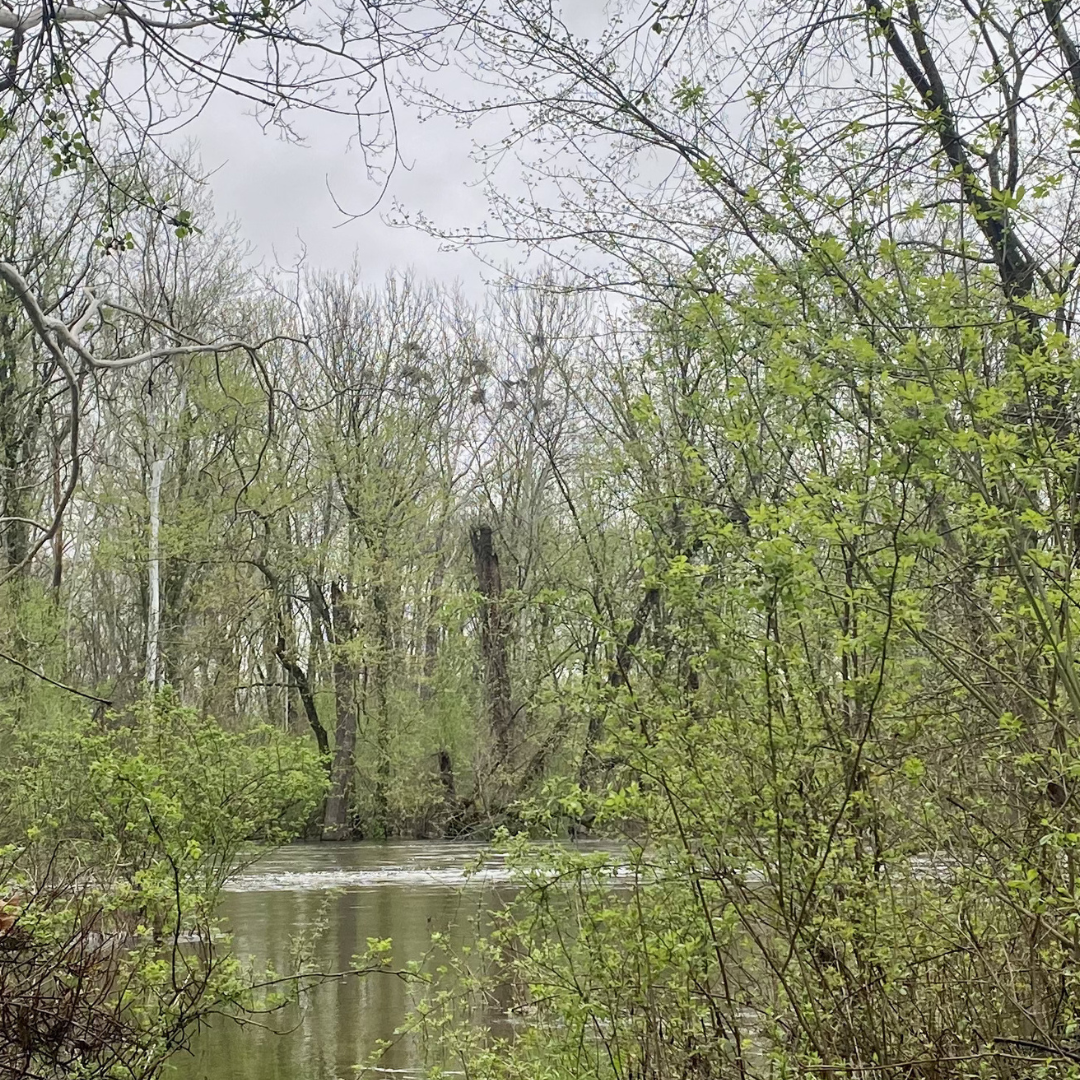
A view of the heronry, with the surging Kalamazoo River in the foreground.
I set up my spotting scope, and we all took turns taking a look. We all got great looks at a Great Blue Heron perched high in the treetops, preening feathers, as well as another sitting on eggs in their nest. It was striking how many herons we saw flying all around us; some arriving with sticks in their beaks (likely the males), some flying from the colony, and others landing in trees all around us.
Together, we witnessed these majestic birds with awe and curiosity. Do they mate for life? What do they build their nests out of? Do herons migrate? What is their spiritual significance and meaning? These and many other questions were discussed in their presence.
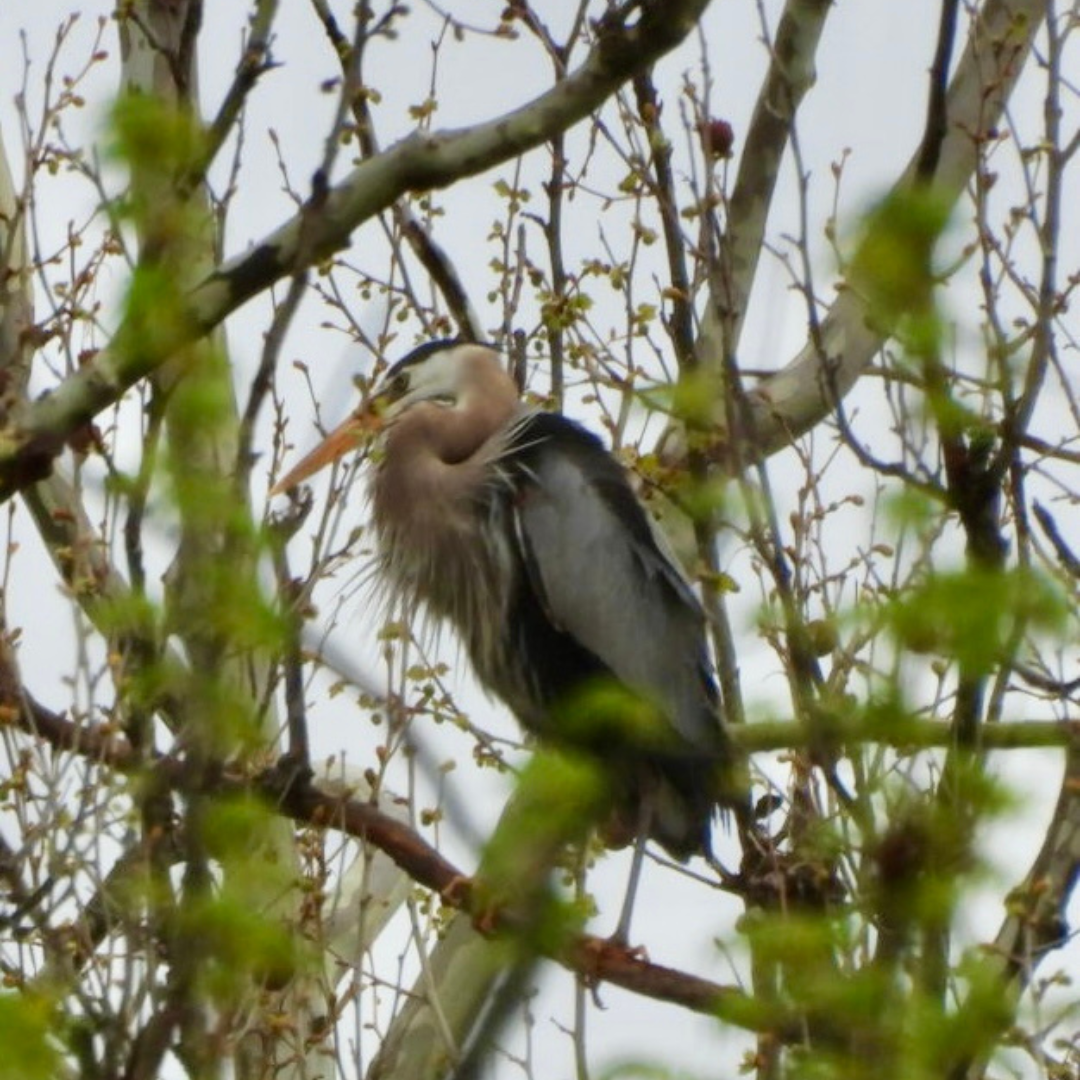
Great Blue Heron in the treetops. 📸 Marlana Bates
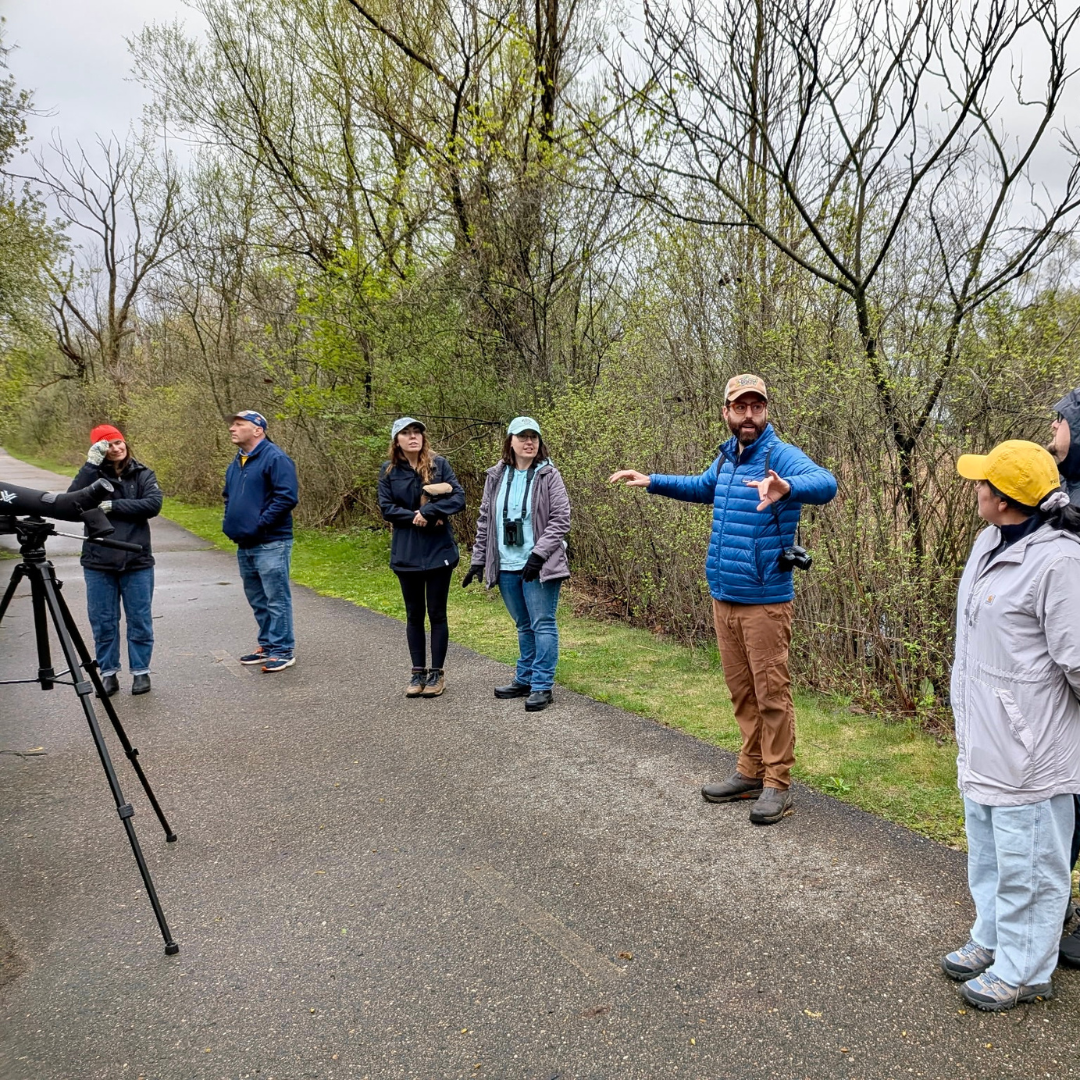
Discussing birdy things! 📸 Julie Saracina
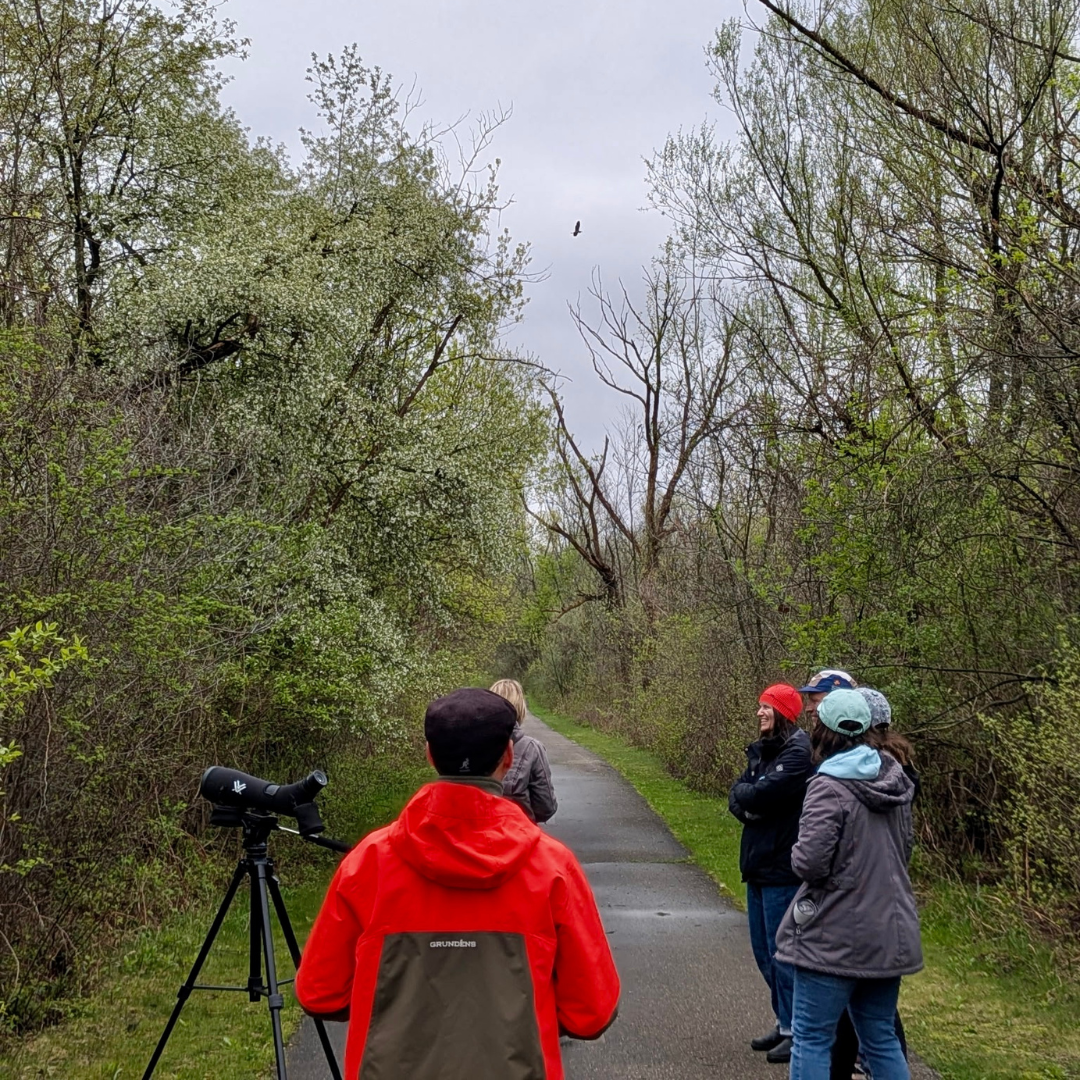
Birders with a Great Blue Heron flying overhead. 📸 Julie Saracina
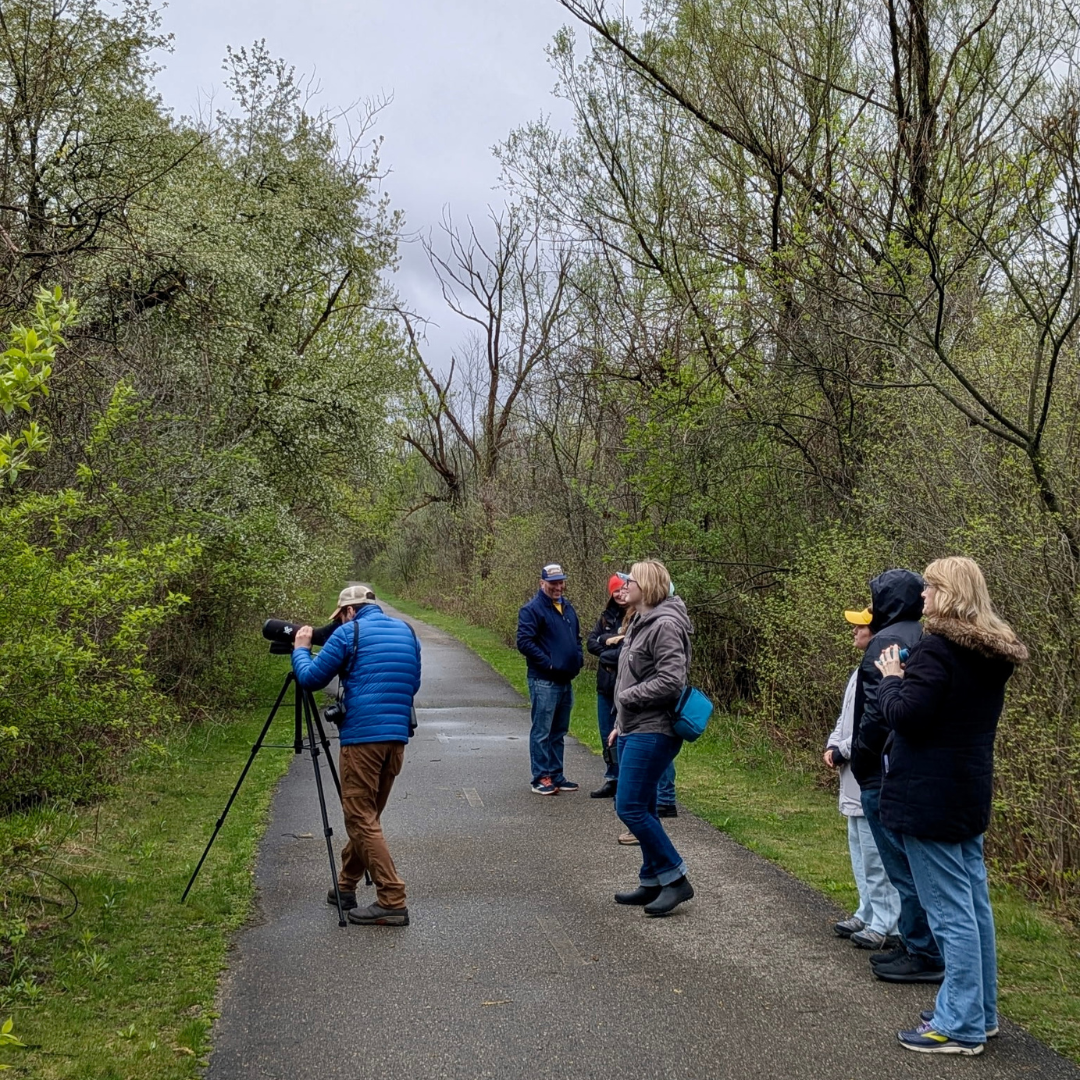
Seth setting up the spotting scope. 📸 Julie Saracina
It felt good to spend time in nature, in the presence of these birds that have been in existence long before humans. In fact, fossil records of these herons go back over 1.5 million years.
Other highlights from our hike included two Cooper’s Hawks playfully chasing each other, a low pass from an Osprey, a fleeting flock of a dozen or so Cedar Waxwings, and a pair of Wood Ducks flying along the river, whistling in flight. You can view the full checklist from our morning here.
One person from the hike shared with me some lessons they had learned from the Great Blue Heron when they were going though a difficult time. These lessons from this sacred bird had shaped their life in a powerful and profound way, with a lasting impact. The medicine from the Great Blue Heron is depicted in more detail in Jamie Sams & David Carson’s Animal Medicine Cards deck and guidebook. To quote directly:
“Heron medicine is the power of knowing the self by discovering its gifts and facing its challenges. It is the ability to accept all feelings and opinions without denying any emotion or thought. Heron flies over those who are unaware of who they are and where they belong in the world. Gently dropping a blue feather to them, Heron asks that they follow their intuition and begin their empowerment journey of self-realization.”
Thank you to all who joined this morning, and big thank you to Chad Waldron for access to this land. Thank you for supporting local birders!
If you would like to purchase a field guide that contains this species and other similar species, consider the Sibley’s Waterbirds of the Great Lakes Region Folding Guide.
For more photos of this heronry from earlier this year, click here.
